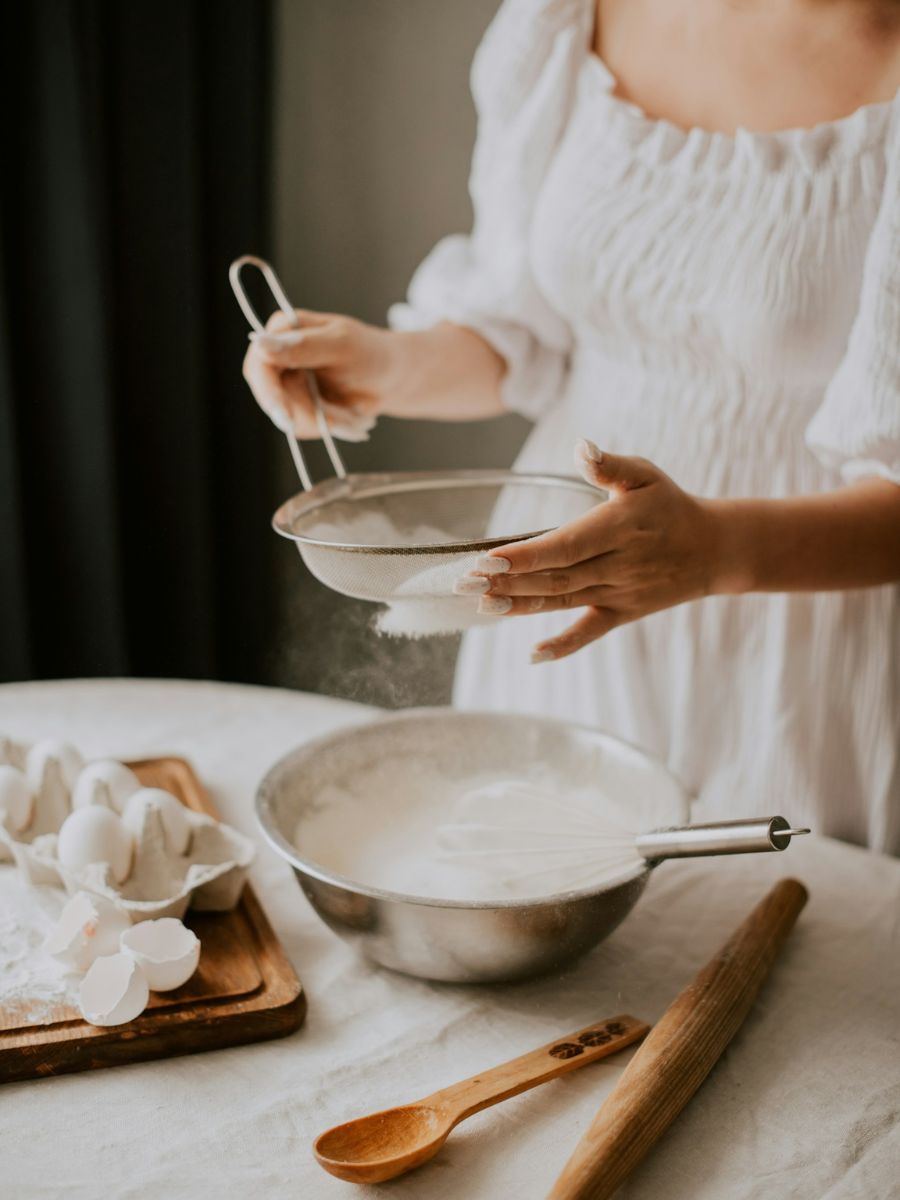
The French pantry is less about excess and more about instinct: a thoughtful collection of ingredients chosen for their versatility, simplicity, and ability to transform the ordinary into something memorable.
There is something deeply reassuring about the French pantry — not in abundance, but in intention. It is not built for spectacle, but for quiet, daily ritual. A place where cooking begins not with complexity, but with confidence.
A well-composed pantry does not overwhelm. It invites.
THE PANTRY ESSENCE
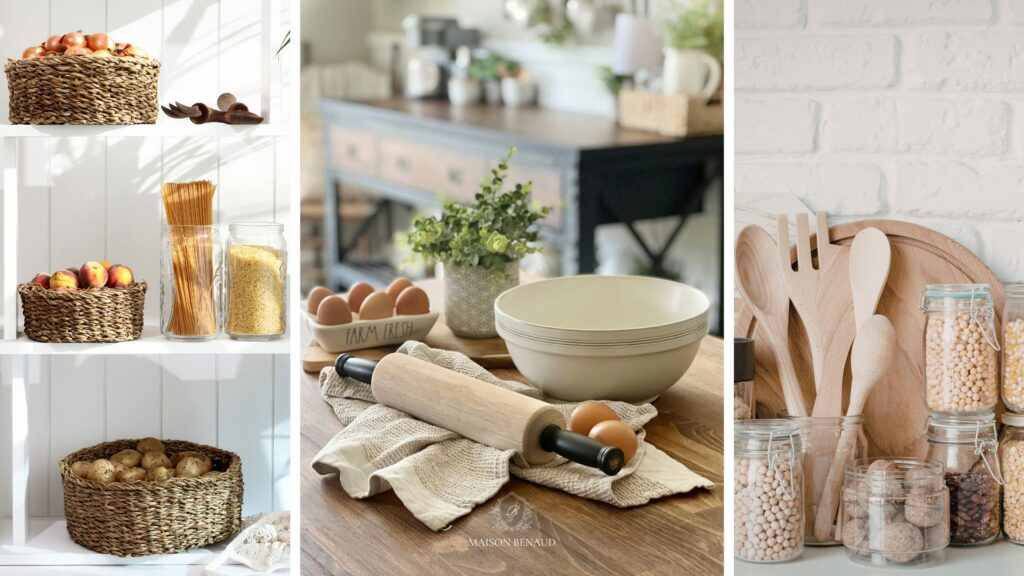
The essence of a French pantry lies in restraint — a thoughtful edit of ingredients that, when brought together, create something far greater than the sum of their parts. It is the foundation of effortless cooking, where a meal can be assembled with grace, even on the simplest of days.
THE PANTRY FOUNDATIONS
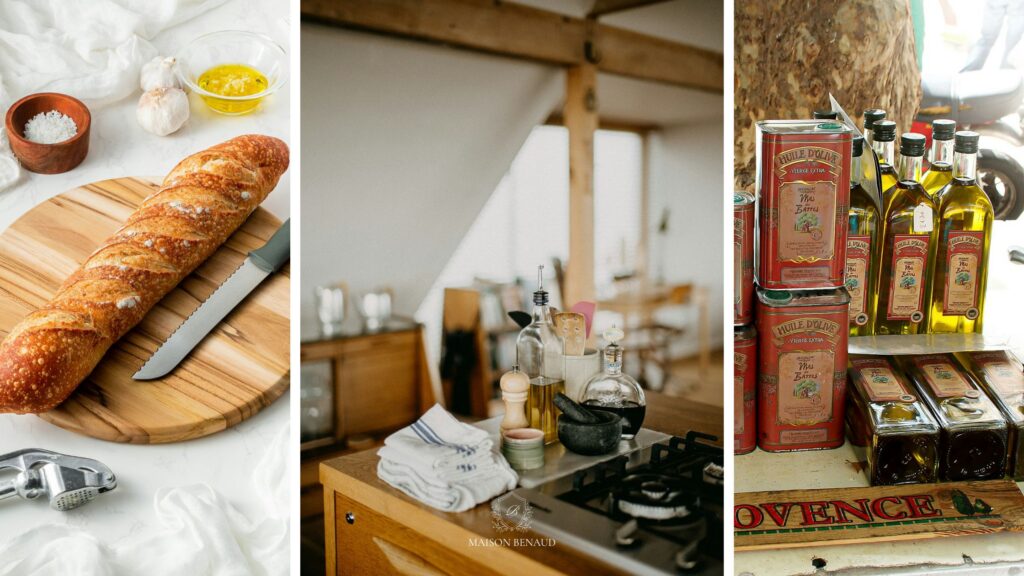
The Foundations: Oils, Vinegars & Seasoning
At the heart of every French kitchen sits a small collection of essentials — used daily, never overcomplicated.
- A good extra virgin olive oil, peppery and golden.
- Dijon mustard, smooth with a gentle heat.
- Red wine vinegar and a delicate white wine vinegar.
- Fleur de sel, soft and crystalline.
- Freshly cracked black pepper.
With these alone, a vinaigrette becomes second nature — whisked together almost without thought, draped over leaves or warm lentils.
THE CUPBOARD STAPLES
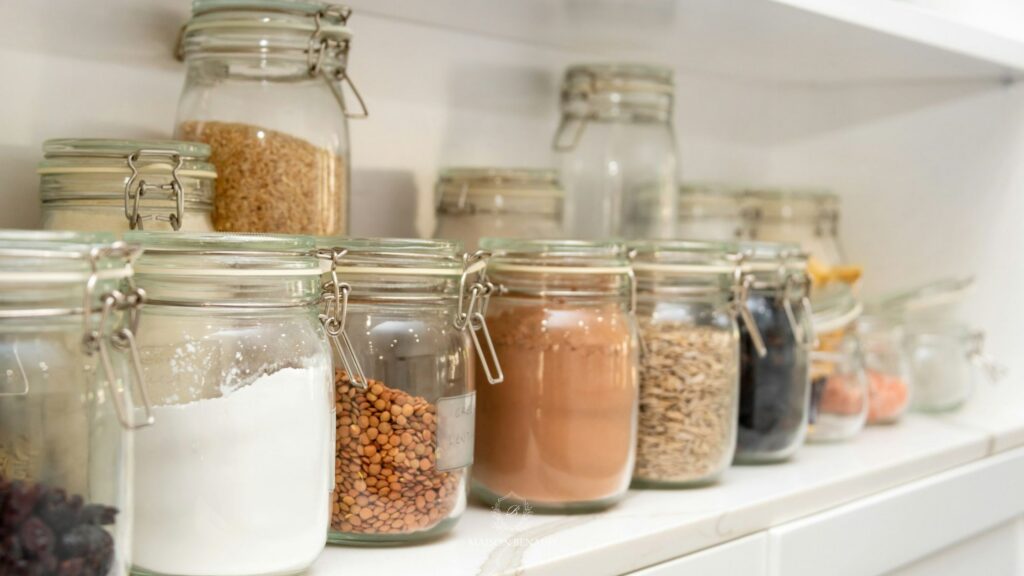
The Cupboard Staples: Quiet Structure
These are the ingredients that linger patiently on shelves, ready to become dinner.
- Lentils (particularly green lentils).
- Haricots blancs or chickpeas.
- A simple pasta — nothing ornate.
- Good-quality tinned tomatoes.
- Anchovies, tucked away in oil.
- Cornichons for brightness and contrast.
There is a quiet poetry in these staples — a reminder that cooking need not be elaborate to feel complete.
CHOSEN WITH CARE
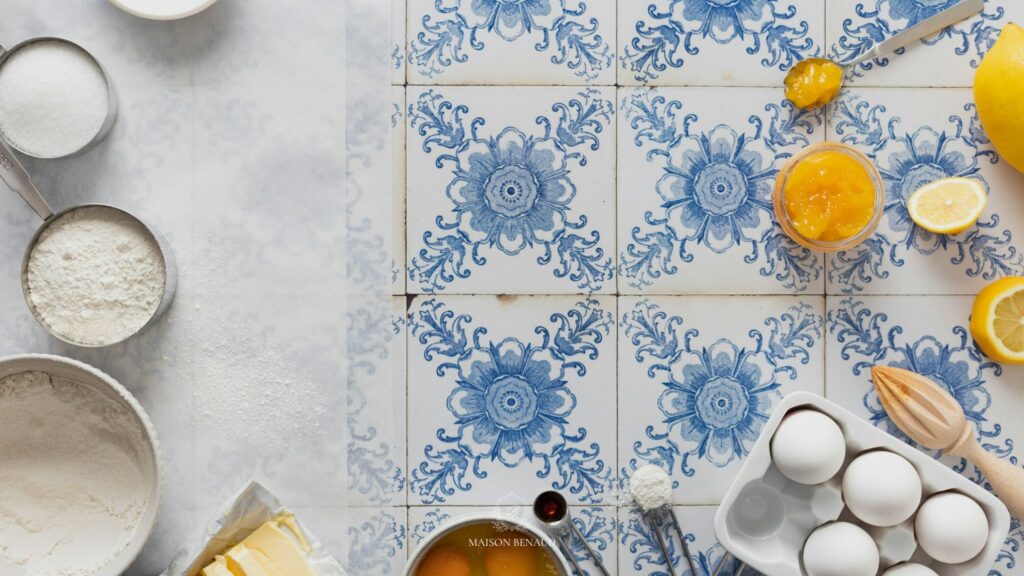
The Fridge: Fresh, But Never Excessive
The French refrigerator is not overflowing. It holds what is needed for the next few days — chosen with care.
- Eggs, always.
- Unsalted butter, rich and essential.
- A wedge of cheese — perhaps Comté or Brie.
- A small selection of seasonal vegetables.
- Fresh herbs, often parsley, thyme, or tarragon.
From this, an omelette, a simple tart, or a warm vegetable dish comes together almost instinctively.
A COOKING PHILOSOPHY
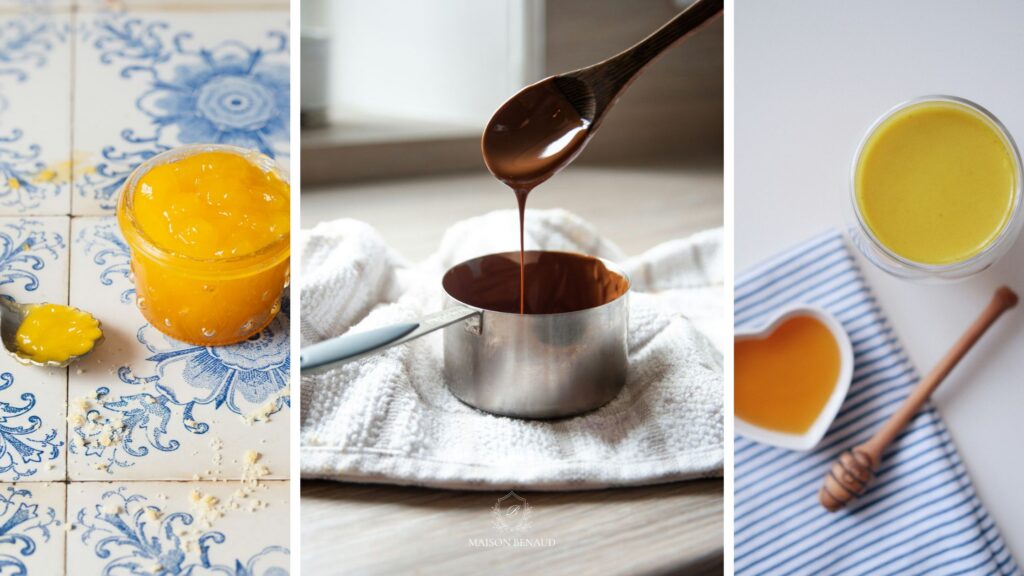
The Small Luxuries: A Touch of Indulgence
Elegance often lies in the smallest detail — the ingredient that transforms the ordinary.
- A jar of good honey.
- Dark chocolate, slightly bitter.
- A bottle of wine worth opening midweek.
- Preserves or confiture.
These are not saved for occasions. They are the occasion.
THE COOKING RITUALS
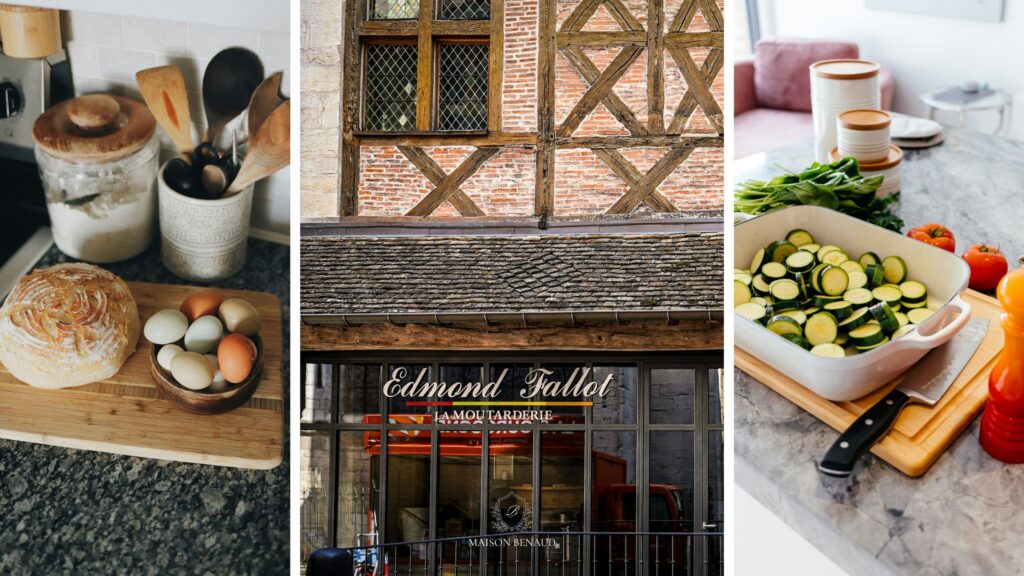
The Philosophy: Cooking Without Urgency
The French pantry teaches something far more lasting than recipes — it teaches rhythm.
To cook from what you have.
Learn to trust a handful of ingredients.
And to sit down, even on a weekday, and make a moment of it.
There is no performance here. No excess.
Only the quiet pleasure of knowing that, with a well-kept pantry, something beautiful is always within reach.
THE KITCHEN ESSENTIALS
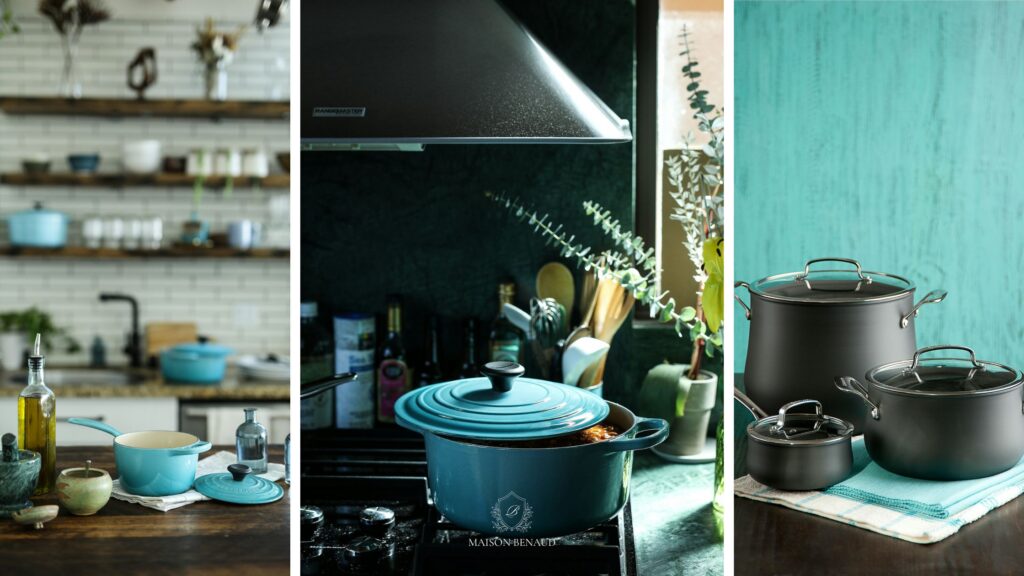
Kitchen Essentials: To Covet & Collect
Only the quiet pleasure of knowing that, with a well-kept pantry, something beautiful is always within reach.
A French kitchen is not assembled in a day. It is gathered over time — piece by piece, chosen for its usefulness, its beauty, and the way it quietly earns its place.
There is a certain pleasure in this slow accumulation. Each object becomes familiar, reaching a point where it no longer feels like a possession, but a companion in daily ritual.
Begin with what you will use without thinking — the pieces that live within arm’s reach: These are the quiet constants. They do not change with seasons or trends.
The Everyday Tools
The tools that shape your cooking — practical, but never without elegance:
- A well-balanced chef’s knife.
- A small paring knife for detail work.
- A wooden chopping board.
- A simple saucepan.
- A cast iron pan.
- Salt & Pepper grinders.
Nothing excessive. Only what performs beautifully, again.
A KITCHEN WITH INTENTION
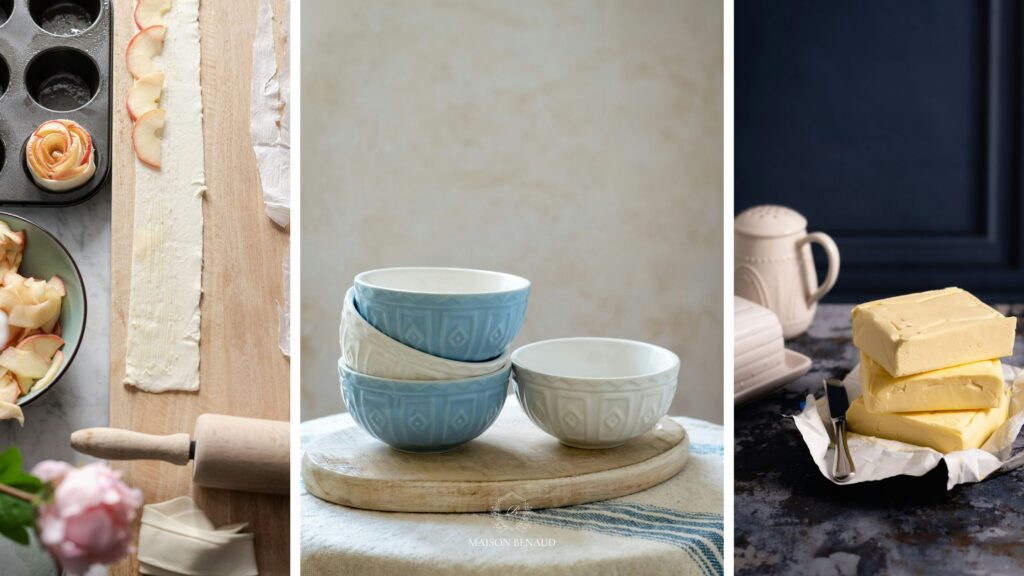
A Foundational Collection
For those beginning — or refining — a kitchen with intention, this is where to start.
A small, essential collection. Nothing more than what is needed, yet everything required to cook with ease and elegance.
- A ceramic mixing bowl — generous, grounding, and endlessly useful.
- A wooden spoon — the most familiar of tools, softened with time.
- A French rolling pin — simple, intuitive, without excess.
- A glass bottle for olive oil — to bring beauty even to the everyday.
- Linen kitchen towels — practical, yet quietly luxurious.
- Glass jars — for pantry staples.
- Simple white plates — for all occasions.
- A small butter dish — always at the ready.
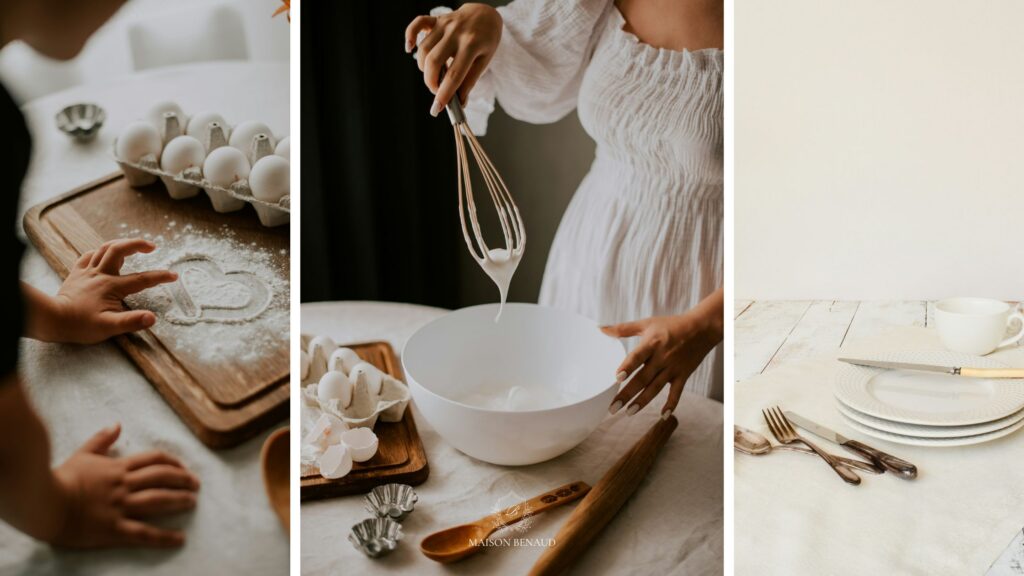
This is not a checklist to complete in a day. hey blur the line between kitchen and table — between preparation and pleasure.
It is a beginning. In the end, a well-kept kitchen is not defined by what it holds, but by what it quietly allows you to create.
ON THE BOOKSHELF
I believe the most beloved kitchen books are rarely the ones that impress — they are the ones that become stained with butter, folded open beside the stove, and returned to season after season.
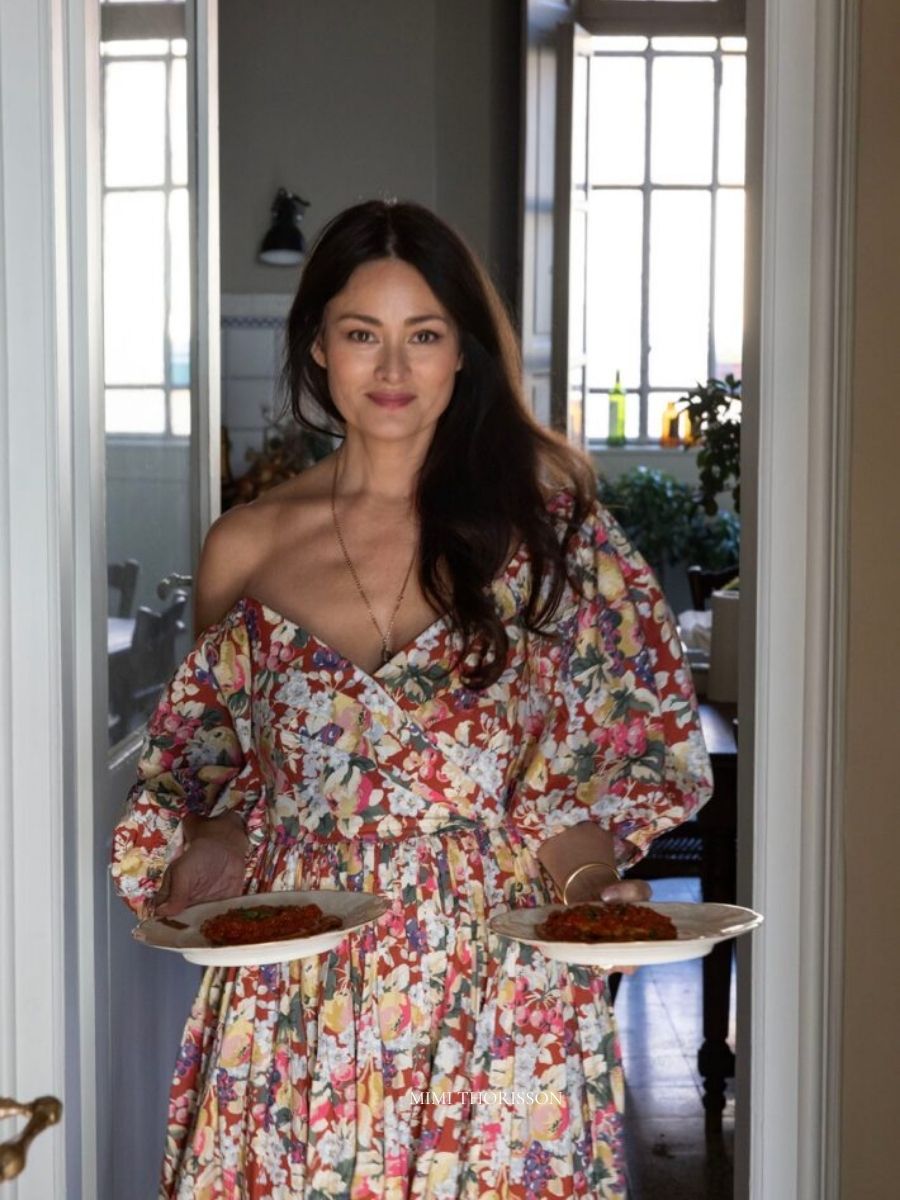
A Kitchen In France | Mimi Thorisson
In some ways this is more than a cookbook. It is also the story of a house, a place in France — a story of how life can take you places you never expected to go.
Perfect for cooks who want elegance without intimidation and dream a little. View Here:
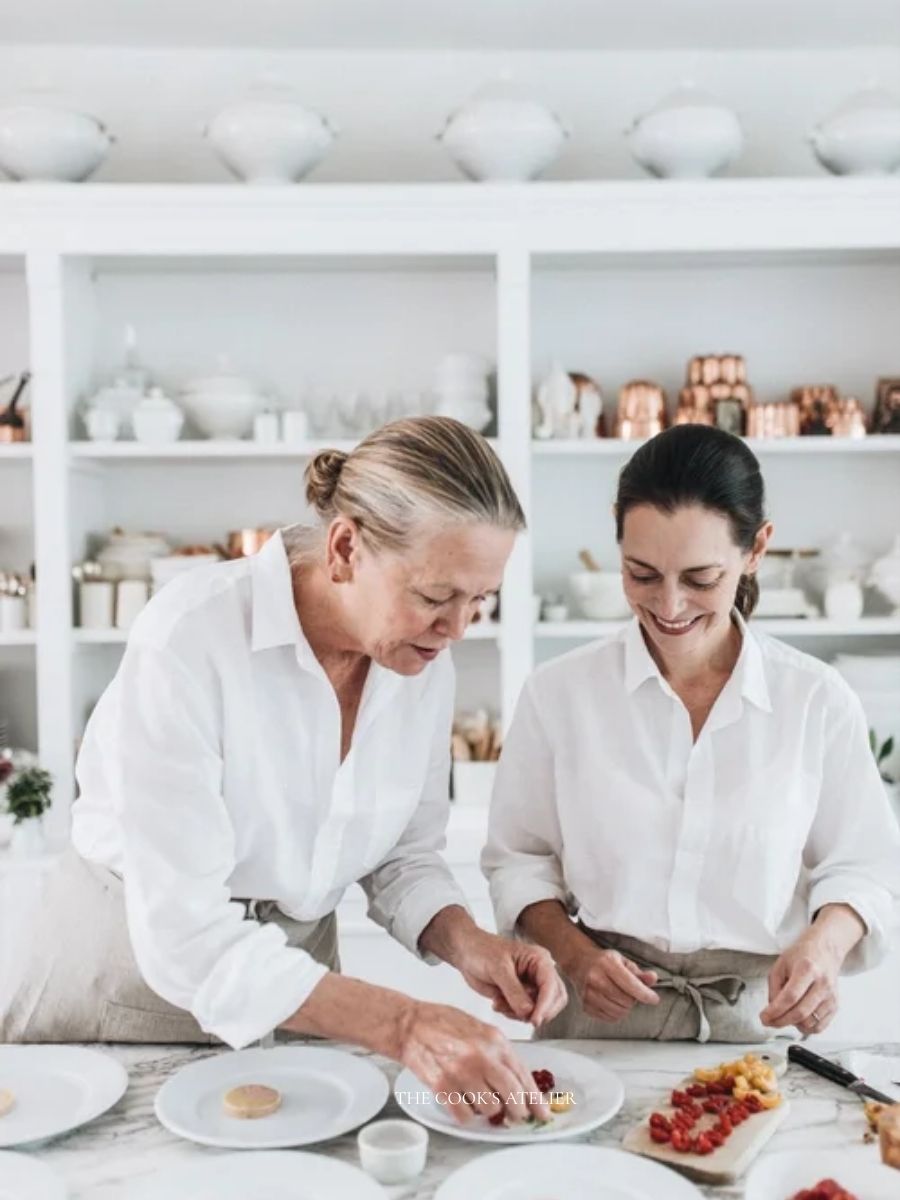
French At Heart | The Cook’s Atelier
French at Heart captures the softer side of French living — where cooking is woven into memory, gathering, and the quiet beauty of everyday rituals. Cooking is about more than just the food.
This is a cookbook about living well the French way whereever you may be. View Here:
This philosophy extends far beyond the kitchen. Discover more in French, Français – A Beautiful Lifestyle, it could be a beginning of a beautiful journey. Read The Story: